Raccoons visit your property in search of food and water. If you spot one during the day, it could not have fed in some time. This is typical, particularly for the young raccoons who have to fight for that territory. In order to give their own offspring an advantage in securing their own area, adult raccoons murder other raccoons without hesitation, much as they do to raccoon newborns during the baby season. Raccoons are nocturnal animals that are usually active at night. Raccoons at night have great vois-on and more power compare tp a raccoon who faces a human at day light. Learn about raccoons at night, their dangers and do they srecanm at night.
Are raccoons dangerous at night?
All creatures that are nocturnal spend the day sleeping and emerge at night. They also have a tendency to have nighttime colors, which explains why their fur is black and gray and their eyes have dark rings around them. Has a football player ever painted his eyes black with grease paint? It improves their vision in low light and prevents solar light from bouncing into their eyes and blinding them. This is a natural trait of raccoons due to evolution. As with other felines, they see quite well at night. The digestive systems of raccoons and other felines are quite unique.
A feline may consume a dead animal that has been decaying in the sun for weeks, in contrast to canine species that would become unwell from consuming something that is less than a day old. Naturally, they will acquire intestinal worms, but the animal will not be impacted. Rather, they will act as conduits for its spread to other animals. This can manifest as blood poisoning from a scrape or as stomach worms in either a person or a canine. House cats are typically clean, have clipped claws, and eat a nutritious diet of fresh food. They are also unlikely to cause such problems. They are therefore safe to pet, but if you come across a raccoon or wild cat, keep your distance and carefully depart the area.
- How to protect yourself from raccoon’s attack
- How to install Guest tools on macOS Sonoma on VirtualBox
- Five interesting facts about raccoons
Do raccoons attack humans at night?
The greatest defense against an assault is to try to stay away from a raccoon, but if things get out of hand, it’s crucial to remain calm. It’s crucial to keep in mind that the raccoon is probably more afraid of you than it is of you, so make sure the animal has a way out of the situation and attempts to get away from it as quickly as you can. It is rare that a raccoon would pursue you if you fled. The best course of action is to hire a professional if you believe the raccoon poses a greater risk to you, your pets, or your property.
Since raccoons are nocturnal creatures, encounters with them are more likely to occur at night. However, their appearance during the day isn’t always a reason for alarm. Reducing your interaction with raccoons is the best way to avoid being attacked by them.
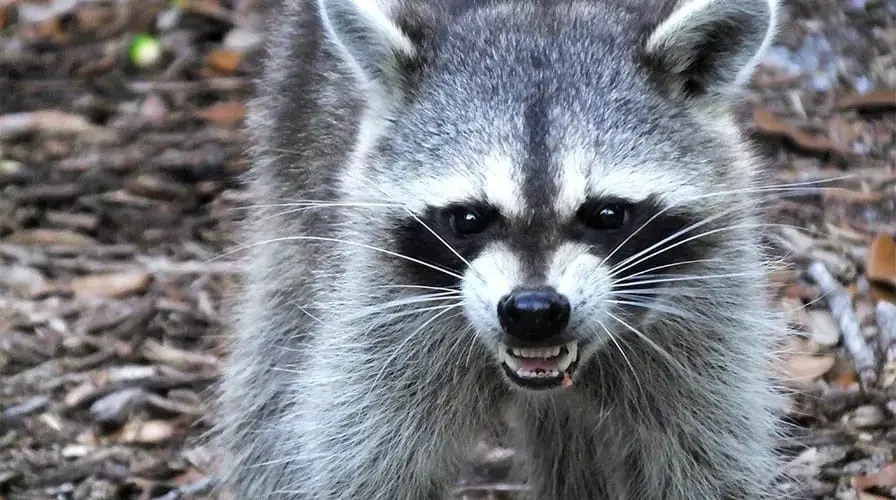
What should you do if you see a raccoon at night?
Keep your cool and refrain from confronting the raccoon head-on if it shows up on your doorstep late at night and won’t go. Since raccoons are often drawn to food sources, it is advisable to clear the area of any possible food supplies and trash. To get the raccoon to go, try creating a lot of commotion or dazzling lights. It’s crucial to avoid attempting to handle or contact raccoons since they may be rabies carriers. If the raccoon problem persists, you might want to get in touch with the local animal control or wildlife authorities for help with the matter in a compassionate and safe manner.
How often do raccoons attack humans at night?
In the event that you believe you have come into contact with raccoon excrement or have been bitten or injured by one, clean and bandage the wound as best you can before getting medical help right away. Even though the wound might not seem serious at first, raccoon-transmitted illnesses can progress quickly once they enter your body through a wound. Perhaps if the cut appears small, the consequences might put you at serious risk or perhaps cause you to contract some horrible, long-lasting diseases.
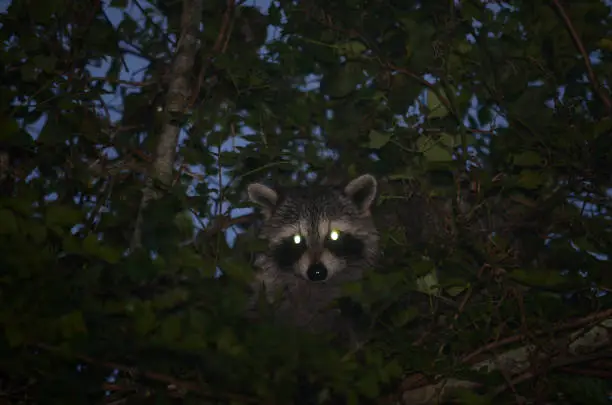
Raccoon assaults are extremely unusual and usually only occur in one of three situations: either they sense your presence and have nowhere to run to, or they are defending their young, or they are unwell and more likely to attack. Raccoons can give off the impression of being assertive or hostile at times, but in general, they are wary of humans and won’t assault. A mother raccoon carrying her young is more likely to flee in terror than to confront a large, menacing predator such as a human!
Attacked by a rabbit raccoon at night?
The rabies virus is the main danger posed by raccoons. Although rabies may theoretically infect any mammal, raccoons are more likely than certain other animals to disseminate the virus. The virus that causes rabies inflames the brain. The symptoms that follow from this inflammation include fever, disorientation, paralysis, and irregular movements. Almost always, death is imminent once symptoms manifest. Rabies may be transferred to people. It can be spread by biting, scratching, or even by saliva getting into the mouth, nose, or eyes. Rabies is a highly contagious and lethal virus.
Despite their cute nature, raccoons are known to be carriers of fatal illnesses. Living with wild raccoons has several health risks, including the possibility of contracting rabies. The simplest method to reduce your risk of contracting rabies is to become familiar with the warning signs and symptoms that a rabid raccoon may exhibit, particularly if you regularly deal with raccoons. Meanwhile, during the night, it is common to encounter a raccoon because they are nocturnal and typically show up at night for prey and better activity.
Do raccoons scream at night?
So, are raccoons vocal? Indeed, because raccoons are nocturnal creatures, a lot of people do hear them at night. Raccoons have a variety of noises that they create, depending on the circumstances. When raccoons are interacting with one another, they could whistle like an owl. When under peril, raccoons can let out growls of protection. Other vocalizations that homeowners may notice are a deep grunt, a loud purr, or even a scream (when under stress). Raccoons at night can be found in residential places, including attics, chimneys, roofs, and beneath decks and porches in suburban and urban settings.

Noises made by raccoons can be mistaken for those made by other animals. For instance, a scream owl’s whistle and raccoon chatter might be mistaken for one another. As a result, raccoons are usually not identified by their noise alone. For assistance in identifying the pest that may have established itself in your house or on your land, think about speaking with a wildlife expert.
Can a raccoon harm your pet?
When raccoons are trapped or defending their young, they may be aggressive to people and pets. It is never appropriate for locals to approach a wild animal, even if it appears at ease or friendly. They are a known vector species for rabies. Rabid raccoons are more prone to attack, but both healthy and ill raccoons are capable of doing so.
The fact that raccoons are scavengers contributes to their ability to flourish in urban environments. Pets like hens and bunnies that might become prey will probably be in danger. This kind of tiny critter rearing in your yard may require additional security measures to account for the possibility of raccoons. Any conflict that arises between cats and raccoons is probably related to territoriality. Raccoons will normally attempt to avoid confrontation with house cats, although the latter may become protective if a raccoon is feeding from their dish on the lawn. However, house cats do not usually hunt raccoons. Although there have been incidents of conflicts between cats and raccoons, it’s more common to witness them sharing space and ignoring one another.
Espaccailly raccoon at night has the most usual conflicts between dogs, since dogs are prone to chasing after raccoons. A healthy raccoon is unlikely to attack a dog, but if a canine confronts a cornered raccoon, it might suffer serious injuries. Do raccoons pose a threat to pets? They certainly can be, even if they don’t often assault them.
FAQ
Conclusion
Consequently, raccoons are amiable animals and would deceive most people with their innocent and charming looks. In fact, it is not easy to know whether a raccoon is sick or not; you should look for signs such as being aggressive and not having control over its behavior. Raccoons are a species of animal that carries a variety of pathogens that are deadly and infectious to pets and humans. Also, raccoons are night mammals and like to wander in the dark for food and prey. It would be beneficial to keep distance from raccoon at night at all costs due to their lack of identification that you are not a hunter to them; they will attack you and might hurt you severely.