
If you’ve ever seen pigeons, you’ve probably seen them cooing, but why exactly do pigeons coo? Here’s the answer.
Pigeons make coo sound primarily to communicate particularly call a mate or defend its territory. However, if a pigeon is under attack, defends its territory or in distress, pigeons make grunting noise to notify, alert, and also to warn others. And if there’s a predator or is in hurry, pigeons will make fast whistle sound as alarming and warning call.
Birds are known for their numerous way of communicating through sound, body language, or a combination of both. And pigeons are one of those distinctive kinds. They have some special sounds which they use to communicate, call, alarm or warn. One of those sounds is pigeons cooing which everyone has heard but doesn’t know about it. Here’s why do pigeons coo and what exactly do they mean when they make it.
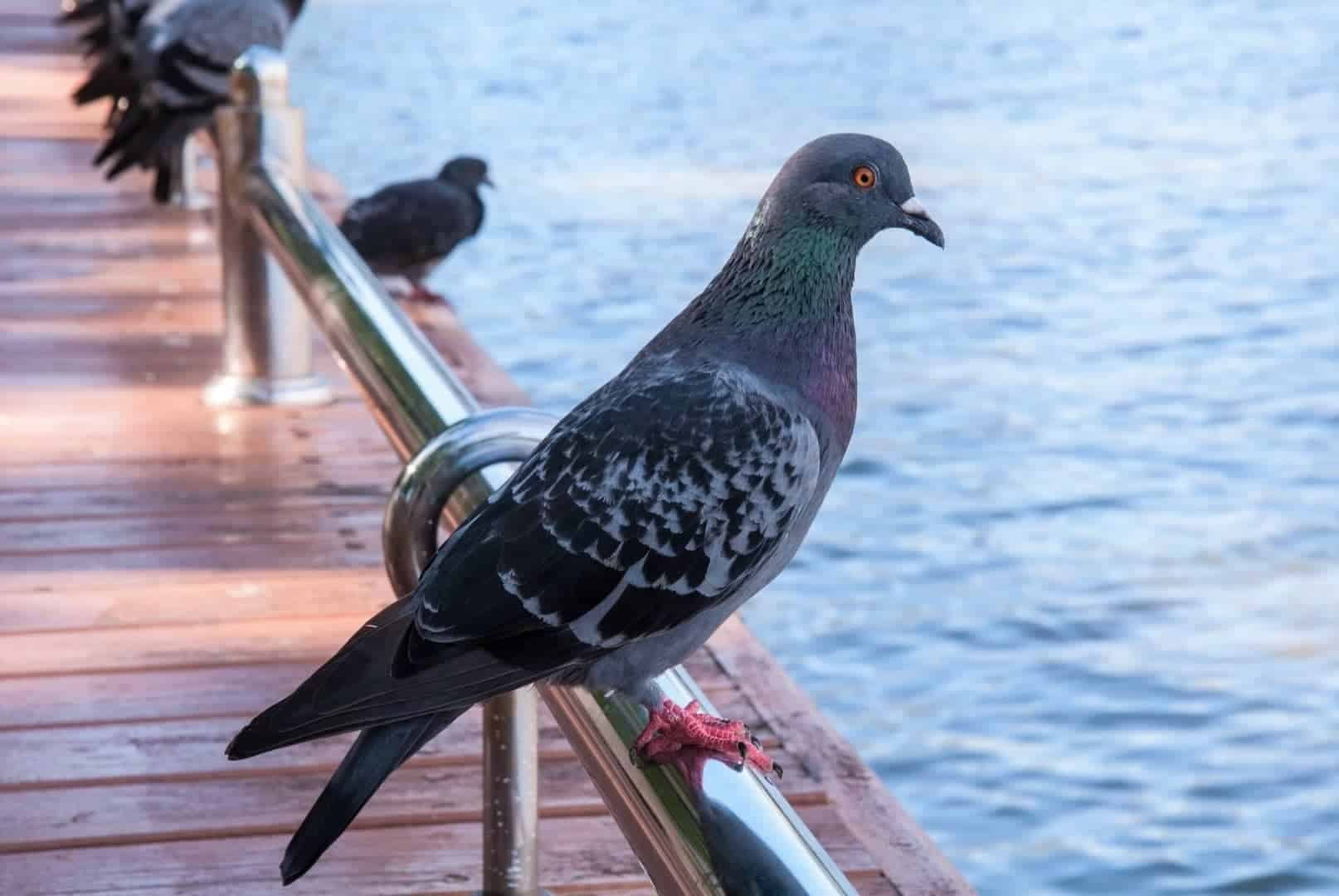
Pigeon Standing
Why Do Pigeons Coo? Let’s Talk About This First
While pigeons are known for their cooing sound, its pretty much unknown why they do it. Unlike squirrels make distressing sounds, pigeons make soft, smooth and ascending sound but only makes it loud when there’s a threat. Just why pigeons coo most people ask but get no answer. Here’s why.
To Attract Mate
When seeing pigeons, hearing coo is pretty common, and it’s a common way of communicating for pigeons too. Pigeons usually coo to attract mates and also show its available for mating. Pigeons make cooing sounds lengthening their sound with their vocal cords and air sac. Like us, pigeons contracte air and pass it out in form of sound.
When cooing inviting a mate, pigeons usually engage in strutting, bowing, and tail fanning. In addition to uttered sounds, pigeons also stamp the feet and slap their wings before taking off. However, those who like this much and also want to mark the pigeon would place leg bands in the feet.
Alert Others
Another reason why pigeons coo is to alert and warn others. Sometimes pigeon makes coo sounds to alert each other of a threat or in defend for its territory. Like if there’s a predator or threat, the pigeon makes repeated coo sounds as alarm calls for other pigeons but also warn the predator. or if another pigeon enters into its territory, it will constantly make coo sounds in defend of its territory like squirrels defending its territory.
This cooing sound is probably raspier, choppier than cooing for mating.
What Else Could “Coo” Mean?
As smart as pigeons are, they transmit more information by cooing than mating or alarm calls, just like how we talk. Pigeons not only coo for calling a mate or defending its territory but they also coo to express their feeling, express their reaction and talk to each other. There are many types of cooing that convey different meanings which we assume means one of these two. Pigeons also coo to call, flirt or lay eggs or invite for building a nest.
Some people reports, like most birds, pigeons coo to flock to get together and they also use their wings to make a purring sound and flapping their wings. And that’s only what ornithologists have been able to interpret of (coo), actually it has much more meaning than what we have found out yet.
How Exactly Piegon Coo & How It is Pronounced?
While pigeons coo might seem the same for every reason, they are not actually the same. In fact, pigeon’s alarm call is specifically “oorhh” and a pigeon’s mate call is usually “coo roo-c’too-coo”.
Why Pigeon’s Coo When I Approach Near?
No matter if the pigeon is in the nest or not, it will make coo when you approach to touch or cuddle because they see you as a threat even if it’s your pet and you have been with it for a long. As pigeon’s also coo in defending to itself and its territory, it assumes you a threat so if you approach it, it will make coo sound as an alarm and warning call.
Do Female Pigeons Coo?
Cooing is not necessarily done by only male or female but both of them make coo sound containing different information depending on the situation but is used mostly by male pigeons calling female pigeons for mate and also to drive away other males.
Why Do Pigeons Make Grunting Sound?
Pigeons will make a grunting noise when they are in distress. If they spot a predator or threat, pigeons will start making grunting noise repeatedly as an alarm and to warn others. And that’s not the only when they do but pigeons also make grunting noise when they are under-attack, hurt, or simply scared of something.
If a pigeon is making this noise, it clearly shows that the pigeon is in distress. So if you hear this sound, you should probably know that the pigeon is in some problem. That can also be but is not limited to a pet, squirrel, raccoon, rabbit, or any other animal that seems a threat to the pigeon especially cats.
And they also make a grunting sound when a pigeon enters its territory or a predator not only animal predators but also humans who try to touch or catch it.
How & Why Do Pigeon’s Make Whistle Sound?
In addition to sounds, pigeon’s also use body language to communicate, just like chipmunks. When a pigeon flaps its wings before taking off, they make a whistling sound – not with their voice but with their wings. When a pigeon whistles normally, it usually means it is taking off. But when a pigeon whistles fast, it alarms others of the presence of danger.
The speed of the cycle informs the pigeon’s whether there is a danger present or if it’s another bird taking off. That means not every time a pigeon whistle alarms each other. In fact, they make whistle sound every time before they take off. The only way they recognize and differentiate is by the speed of the whistle.
The distinctive sound was discovered to be coming from the eighth feather on the pigeon’s wings. When this feather was removed from the bird, the sound disappeared along with it.
When the researchers played back the audio recordings of slow wing beats, the birds stayed where they were. But when they played faster wing beats whistles, the birds were more likely to flee.
However, pigeon’s distintive wing beats (whistle) represents Beijing and there’s no other sound like it. And as well as people also use whistles to train and catch piegon’s that some make the sound with their hand and mouth whereas some make whistle sound only with their mouth.
How people train is, they first show it the bird within the nest. Then they will try it in the open air.
What Sound Do Baby Pigeons Make?
When the adult pigeons leave for food during the daylight, baby pigeons are left in the nest so when they get hungry, they start make squeaking sounds which people interpret as crying. If they are in distress, they will make snap their beaks or hissing noise.
Conclusion
Along with doves, all the 175 species of pigeons make coo sound. The main reason they make coo sounds is to attract mate which is mostly done by male pigeons. But they also make sound sometimes to defend their territory. But that’s not the only meaning they potentially could have. It conveys more information than what we have found. That’s only the surface.
Pigeons are smarter than we think and they have quite unique features which we have known a few yet. And they are the only animal which recognizes themselves in the mirror which is amazing. Even sometimes we are scared of ourselves in front of mirror – 🙂 just kidding!
Next time, when you hear pigeons, you will know what’s happening. Share this article with others and thank me later.
Cheryl Trewin
Thank for the info I have a pidgen it’s obout 3,4 mths old, my son brought it home when he found it alone and cold, so brought it home home for me to take care of, and now he won’t leave my side, he follows me everywhere even when I go outside in my back garden, he flew up to the shed roof and was stood up there looking for me as soon as I went back out he flew down and followed me back indoors, I also have an African grey, he to loves his mum, and if cracker comes near me my birdie, (pigeon) he coos at him while moving around, like yesterday I was ill and he never left my side 😍 I’ve never had a pidgen before, but there’s loads of the normal grey ones come to my garden for food, but my birdie I worry about he’s used to my dog and they will walk alongside each other, even while eating, and this scares me if he ever does fly away 😢 some advise would be great if possible 🙏
Anna
Thank you for sharing this information.
Pigeons are wonderful animals.
ALLISON
Thank you I enjoyed this